

SEND
A Warm Welcome
Welcome to our school SEND information report. We update this report every year, or more frequently if any significant changes occur during the school year. Here, you can find out how we carry out all aspects of our SEND policy. We are a secondary school for 11 - 16-year-old pupils; we do not have any additionally resourced SEN provision. Pupils with SEND fully access our ambitious, broad, and balanced curriculum. In Year 10, they study the core subjects—English Language, English Literature, Mathematics, Science (Double or Triple Award), Religious Education, and Physical Education—alongside their peers. In addition, they choose three GCSE options, with a range of subjects available, including some BTEC courses. We are proud to offer an inclusive approach where pupils with SEND participate in all lessons and learning experiences with their classmates, ensuring equal opportunities and high aspirations for every learner.
More information about our curriculum offer can be found by clicking on this link:
Need this resource in another language?
If you would like to read this report in a different language, please use Chrome, click on the ellipsis (three dots) in the top right-hand corner, then click on ‘Translate.’
You can select which language you want it to be translated into.
Support with understanding SEND terminology
If you come across any words or phrases with a meaning that is unclear to you, please refer to this helpful SEND (Special Educational Needs and Disabilities) Terminology Guide on the Birmingham Local Offer Website.
The link is below:
Review 2026
This year, we reviewed the report in detail with a parent forum and are deeply grateful to them for giving their time to help us drive meaningful improvements. During our discussions, parents shared that families of young people with SEND often feel unseen. Listening to their feedback and acting on it has helped ensure they feel heard and valued. At Queensbridge, we place great importance on parental and carer voice and believe that working in partnership with families is essential. Parents and carers are the experts on your child, and to support pupils with SEND effectively, we must listen, learn, and respond to what you have to say. We regularly involve pupils, parents/carers and external experts in the quality assurance of our provision for pupils with special educational needs and we are always delighted to hear your experiences of the SEND support available at Queensbridge, so that we can continue to refine and develop our offer. If you have any feedback, the SEND team can be contacted via email on SEND@queensbridge.bham.sch.uk
The number of students with SEND has increased significantly this year and is projected to rise further in September 2026. As a result, our resources are under greater pressure than ever, and we are working diligently to ensure every pupil continues to receive the support they need, despite the challenges this presents.
Meet the key staff supporting SEND
J Klaces
Chair of Governors
Lead SEND Provision Governor

Ms R Wheeler
SENDCO

Ms C Sanders
Assistant SENDCO
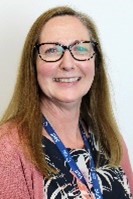
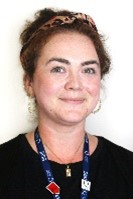
Ms N Parker
SEND Administrator
how we listen to and work with pupils and parents/carers
At Queensbridge, we value the partnership between school, pupils, and parents/carers. We understand both the challenges and the rewards of supporting a child with SEND, and we are committed to making sure parents and carers feel listened to and involved every step of the way.
When we identify that a pupil may need special educational provision, we always involve both the pupil and their parents/carers in the discussion. These conversations—whether in person, over the phone or online—help everyone share their views and build a clear picture of the pupil’s strengths and areas for development. Together, we agree on the outcomes we are working towards. Notes from these meetings are added to the pupil’s SEND file, and copies are available to parents/carers on request. If a decision is made that a pupil will receive SEND support, we notify parents/carers formally.
Pupil voice is central to our ethos. Pupils are actively involved in their own annual review meetings and are encouraged to reflect on their learning experiences, share their ambitions, and set personal targets as they progress through school. We also encourage pupils to talk openly with their teachers about what helps them learn best.
We regularly receive feedback from parents, carers, and the professionals we work with, that co-production is a strength of ours. For more information about co-production and its importance, please click on the link below:
what support does Birmingham's local offer provide?
Queensbridge School is just one aspect of the much wider ‘Birmingham Local Offer’ for children and young people with SEND.
Families are strongly advised to become familiar and to regularly look at the Birmingham Local Offer the link to which is below. There you will find more information on the wide range of services that are available to support all areas of your child or young person’s life. This includes support with education, physical and mental health, social care, leisure activities and moving towards independence and adulthood. The local offer gives help, advice, and information about all the services available for children and young people from birth to 25 years with any form of special educational need or disability.
We regularly advise parents/carers where there are high quality and free courses, seminars, and workshops available that relate to the SEND need of their child or young person. However, these can all be found on the Birmingham Local Offer website. There is a link to this in our termly parent/carer newsletter also.
Watch this video for more information:
How our queensbridge values shape sEND support
At Queensbridge School, we believe that all our teachers, are teachers of pupils with special educational needs and disabilities. All subject and senior leaders are leaders of pupils with special educational needs and disabilities. We operate a person-centred approach to SEND provision by considering the needs of the whole child, whilst working closely with parents/carers and external professionals. Support of pupils with SEND is informed by our core values of Respect, Kindness, Resilience, Leadership and Aspiration.
We help grow the inclusive nature of the school through regular ‘Celebrating Differences’ assemblies and a range of events. We have a ‘Celebrating Differences’ section in the library. We capture pupil voice in staff training sessions through videos, audio recordings etc, with the aim of empowering pupils to be able to speak openly and reflectively about their strengths, challenges, and ways they break down barriers to learning.
At Queensbridge, we are committed to ensuring that pupils with SEND feel safe and supported. We take a proactive approach to addressing any discriminatory or bullying behaviour. To provide a calm and welcoming space, pupils with SEND are encouraged to use our Intervention Room during break and lunchtimes if they prefer a quieter environment. We also encourage them to share any concerns with a member of staff in the Intervention Room or with one of the many adults stationed around the school at duty points.
how many pupils at queensbridge have SEND
Queensbridge School has a significantly higher than local and national average number of pupils with SEND on role. As of July 2025, 27% of our whole school cohort has an identified special educational need.
understanding the four main areas of SEND
Cognition and Learning
Pupils may learn at a slower pace. Some may have memory and organisational difficulties. Some will have moderate learning difficulties (MLD) severe learning difficulties (SLD) This category of need includes specific learning difficulties (SpLD) such as dyslexia, dyspraxia, dyscalculia, and dysgraphia.
Communication and Interaction
Pupils may have speech, language, and communication needs (SLCN), such as developmental language delay. They may find using and/or understanding language difficult. Pupils may find it challenging understanding social rules of communication and have a diagnosis of autistic spectrum disorder (ASD).
Social, Emotional and Mental Health Difficulties
Pupils in this category may come across as withdrawn, isolated, challenging or may struggle to manage their relationships with other pupils. Some mental health difficulties can include anxiety, depression, self-harming, substance misuse and eating disorders. Attention Deficit Disorder (ADD) and Attention Deficit Hyperactivity Disorder (ADHD) and Attachment Disorder (AD) are also included in this category.
Sensory and Physical Needs
Pupils in this category may have a visual impairment (VI) hearing impairment (HI) multi-sensory impairment (MSI) or a physical disability (PD) Most sensory or physical needs requires specialist ongoing support and specialist equipment.
A child can be listed on the Special Educational Needs (SEN) register for any of the areas mentioned. Some children may have more than one type of need. Following the SEN Code of Practice (2015), schools must identify the main area of need from four categories and, if there is another, a secondary area of need.
How do we make sure every child can join in
Our ambition is that our wider learning offer, including extra-curricular activities, school visits, clubs and residentials, enable all our pupils to participate.
There is a free breakfast club for all pupils from 08.15 - 08.45 every morning.
Where pupils wish to take part in a particular activity, from our wide-ranging offer, and they present with significant physical or medical needs, we take advice from parents/carers, medical professionals and our local authority advisory team to see if we can remove any barriers to their participation.
Queensbridge strives to be a welcoming and fully inclusive community. This is reflected in both the curriculum and the comprehensive enrichment offer. Please see the wider learning section of our website for full details. We strive to adapt any club or enrichment activity to meet the needs of all pupils wishing to be involved.
Who does what? roles and responsibilities in SEND support
The Class Teacher
Teachers at Queensbridge have high ambitions and set challenging targets for all pupils that they teach, including pupils with SEND. Class teachers across all subjects are responsible for high quality teaching and tracking pupil progress against targets and long-term outcomes. High quality teaching, adapted for individual pupils or groups of learners, is the first and most impactful step in responding to pupils who have or who may have SEND. Additional intervention and support may sometimes be necessary at subject level.
Some members of the SEND Team work with pupils who have more complex needs, following guidance from the SENDCO. Every child on the SEND register has a key adult from the SEND Team who knows them well and supports their learning.
Subject Specialist Support Staff
These staff work closely with the subject lead and have a strong understanding of the subject they support. They help children with SEND in lessons, focusing on building independence. They know the subject plans and what is being taught throughout the year, so they can give the right support at the right time.
The SENDCO
Takes overall responsibility for co-ordinating provision for pupils with SEND. Has overall strategic responsibility for the provision, providing guidance, support, and training to all adults in the school who work directly with pupils. The SENDCO is responsible for reviewing and where necessary improving teachers’ understanding of the full range of SEND needs that make up our school community. The SEND team regularly liaise with subject specialist support staff to evaluate the impact of support being offered in subject areas to pupil with SEND.
The Assistant SENDCO
Supports the SENDCO with all the above and is responsible for overseeing the timetabling of support staff.
EAL Co-ordinator
Responsible for ensuring that all pupils with English as an additional Language are happy, learn well and can achieve their potential at Queensbridge and beyond. At Queensbridge we recognise that welcoming different languages helps our school grow by encouraging respect and celebrating all cultures.
Pupils arriving from overseas receive a warm welcome and the support they need to develop their English proficiency and become fully integrated into our school community. Through careful assessment, continued monitoring, adapted resources and a range of small learning groups, all our EAL pupils have full access to the educational opportunities provided at Queensbridge.
The SEND Governor
A member of the governing body with specific oversight of the school’s arrangements for SEND. The SENDCO works alongside the Head Teacher and the SEND Governor to make decisions about the direction and development of SEND in our school. The SEND Governor helps raise awareness of SEND issues at governing body meetings. They will give up-to-date information to the governing body on the quality and effectiveness of SEND and disability provision within the school in conjunction with the SENCO.
The Headteacher and Senior Leadership Team
Ensure that Queensbridge holds ambitious expectations for all pupils with SEND and that we sustain cultures and practices that enable pupils to access the curriculum and learn effectively. They also ensure that Queensbridge fulfils its statutory duties regarding SEND.
Support Staff Areas of Responsibility
Under the guidance of the SENDCO. roles include Exam Access Arrangements; Speech and Language Support Interventions; Autism Spectrum Condition and Social, Emotional and Mental Health Needs including P(LAC) pupils’ interventions; Adaptive Teaching for Pupils with Complex Needs.
how we identify SEND needs at queensbridge
The SEND Code of Practice (2015) states that a child or young person has Special Educational Needs (SEND) if they have a learning difficulty or disability which calls for special educational provision to be made for them, beyond that of most of their peers.
A learning difficulty means that the pupil has significantly greater difficulty in learning than most pupils of the same age. Or it may mean that a pupil has a disability, which needs different educational facilities from those generally provided by schools for pupils of the same age.
Importantly, most pupils with SEND have been identified before entry to secondary school and steps taken to anticipate and meet their needs. However, if we have a concern about a pupil who has not already been identified, we begin monitoring and supporting the pupil as quickly as possible. Our process for this is as follows:
- Class teachers gather relevant evidence: pupil observations, work samples, assessment data, discussion with support staff working with the pupil.
- The teacher arranges a meeting with the SENDCO or Assistant SENDCO to discuss concerns. A decision will be made whether to take this further or whether to provide support and monitor the situation more widely.
- If we decide to progress the concern, The SEND team will contact the parent/carer to discuss the concerns, needs, strengths, strategies, and next steps.
- Parents/carers will always be made aware that school is to make special educational provision for their child and will be asked to give consent for any outside agency involvement.
- The pupil is added to the whole school provision map system, and a Pupil Learning Profile is created and shared. The Pupil Learning Profile is reviewed, as necessary.
How we manage and support pupils on the SEND register
A Queensbridge we maintain a register of those pupils who receive SEND support in the form of additional resources, interventions, and reasonable adjustments. This register in compiled by the SENDCO and Assistant SENDCO and managed day to day by the SEND Administrator. It includes pupils at school support level, those with an SSPP (SEND Support Provision Plan) those with an EHCP (Educational and Health Care Plan) and those for whom we make reasonable adjustments to meet their needs.
This register categorises SEND pupils into the four broad areas of need as stipulated in the Code of Practice 2015. This list feeds into our provision mapping system and provides us with vital information that informs our whole school planning and training.
how we plan and deliver SEND provision
At Queensbridge pupils are kept in lessons as part of our inclusive approach, and in recognition of the fact that gaps in learning create additional stress and difficulties accessing the curriculum. We take a strengths-based approach, emphasising the importance of growth and development rather than focusing on helplessness and what pupils are supposedly 'unable' to do.
Following placement on the SEND register (and if considered necessary) a Learning Profile is then written in conjunction with the pupil, parents/carers, and school staff. If outside agencies are involved, they too are invited to take part in this planning.
Where pupils require additional support, this follows a graduated approach and is reviewed, as necessary. Interventions may be planned for individuals or groups of pupils who share similar needs. Information is shared with all staff by the means of our provision mapping system and the creation of Learning Profiles. Each profile includes details of the pupil’s SEND history, specific needs, strengths, and reasonable adjustments leading to more formalised access arrangements at KS4.
A provision mapping tool is used to map and manage any provisions that are additional to and different from an already highly differentiated curriculum and high-quality teaching repertoire. The provision mapping is co-ordinated by the SEND team but is fed into the whole school, providing the various provisions on a day-to-day basis.
Can a child be removed from the SEND register
If a pupil makes expected progress, and all parties agree that the barrier to learning has been removed or the gap between them and their peers has closed sufficiently, then the pupil will be removed from the school SEND register. This decision is made based on school assessment data, advice from external agencies, evidence from any standardised testing and following consultation with subject teachers, the SEND team involved, the student and parents/carers.
our approach to teaching pupils with SEND
High quality teaching, adapted for individual pupils is the first and most impactful step in responding to pupils who have or who may have SEND. Additional intervention and support may sometimes be necessary at subject level. Teachers at Queensbridge have high ambitions and set
challenging targets for all pupils that they teach, including pupils with SEND. Class teachers across all subjects are responsible for high quality teaching and tracking pupil progress against targets and long-term outcomes.
Under the guidance of the subject teachers, support staff develop a specialised grasp of the pedagogical demands, skills, and content of the subject in which they are based. Subject specialist support staff therefore have meaningful, subject specific interactions with pupils with SEND, moving pupils towards outgrowing additional support. they will be familiar with subject long terms plans, schemes of work and cycle assessments demand.
We are proud to be a TIASS School – Trauma Informed and Attachment Aware. Therefore, all our staff members are trained in TIASS principles by the Educational Psychology Team. An Attachment Aware School is a place where resilience is promoted, and the most vulnerable children can recover from trauma.
In addition to this high-quality universal offer for all pupils with SEND, we have a repertoire of additional targeted support options, decided in collaboration with pupils, parents/carers, external advisory agencies, and the SEND Team. These interventions are time limited and carefully planned to ensure that lost learning time in their lessons is minimised.
- 'Love Literacy' Group for pupils with literacy difficulties
- CATCH-UP Reading Programme
- Additional timetabled literacy lessons across 7-9 for pupils with the highest levels of literacy need.
- Maths interventions both in class and small group/ one to one.
- Targeted small reading intervention groups delivered by teachers and support staff across the whole school.
- Subject drop-in at KS3 and KS4.
- Access to Assistive technology: Reader pen, Laptop, ipads.
- Enhanced pastoral support from non-teaching Heads of Year and Form Tutors.
- Sessions with visiting CAT worker (Communication and Autism Team)
- Sessions with in-house support staff trained to deliver targeted interventions.
- Sessions with external speech and language therapist from the West Midlands Speech and Language Service and/ or the designated NHS Speech and Language Therapist.
- Sessions with in-house Speech and Language trained support staff.
- Sessions with in-house EAL Co-ordinator.
- Alternative activities at break and lunch.
- Access to the First Aid and Medical Co-ordinator
- Educational Psychologist input for the most significant areas of need.
- 1:1 Specialist Teaching Assistant support where needs are significant (please note it is increasingly challenging for us to put this in place due to increasing number of pupils joining our cohort who require this)
- Specialist external support from Physical Disability Support Services
- Specialist external support from Language, Learning and Strategic Support Team
- Specialist external support from the Specialist School Outreach Service
- Specialist external support from Visual Impairment team.
- Specialist equipment as required.
- Part-time Alternative Provision in exceptional cases.
working together with specialist SEND support services
At times, we seek additional guidance and may involve external agencies to provide the necessary support. Decisions are made about referrals to these services through discussions with pupils’ parents/carers, class teachers, and SENDCO. Parents/carers consent are always sought prior to any assessment by external agencies.
There will often be a long waiting list for accessing these services, some of which the school pays for. We routinely purchase additional hours from these external services to appropriately meet the needs of our large SEND cohort.
- Educational Psychologist (EP)
- Speech and Language Therapist (SALT)
- Specialist School Outreach Service (SSOS)
- Children and Young People’s Occupational Therapy Service (CYPOT)
SEND and Inclusion Services
- Language, Learning and Strategic Support Team (LLSS)
- Communication and Autism Team (CAT team)
Sensory Support Services
- Physical Support Team (PST)
- Visual Support Team (VST)
- Hearing Support Team (HST)
There can be a long waiting list to access some of the above services. In the meantime, there are many ways parents and carers can seek support from services. For more information, please click on the link below:
how we check progress and celebrate success
We follow the graduated approach and the four-part cycle of assess, plan, do, review. This happens across all subject areas. The subject teachers work with the SEND Team as necessary in this process.
Assessing and Reviewing the Progress of pupils with SEND will include:
- The subject teacher’s assessment and classroom experience of the pupil.
- Their previous progress, attainment, and behaviour.
- Pupil progress in comparison to their peers and national data.
- The views and experience of parents and pupil.
- Advice from external support services, where relevant.
All teachers and support staff who work with the pupil are made aware of their needs, the outcomes sought, the support provided, and any teaching strategies or approaches that are required. We regularly review the effectiveness of the support and interventions, and their impact on the pupil’s progress.
We use the Birmingham ‘Preparing for Adulthood’ tool, developed by the Department for Education (DfE), to help plan for the future as part of Education, Health, and Care (EHC) planning. This tool encourages us to focus on four key outcomes that support a successful transition into adulthood:
- Employment – preparing for work and career opportunities
- Community Inclusion – being an active part of society
- Independent Living – developing skills for independence
- Health – promoting physical and emotional wellbeing
For more details, please see the link below:
supporting families every step of the way
At Queensbridge, our intention is to create a close working partnership with the parents and carers of pupils with SEND. We incorporate parent/carer views in assessments and reviews of SEND provision and to keep everyone fully informed about relevant procedures.
The teaching SENDCO, the non-teaching Assistant SENDCO and the SEND Administrator can be contacted via email on SEND@queensbridge.bham.sch.uk. When we receive your email, you will be sent an immediate acknowledgement and then a member of the SEND Team will respond to your query within 48 hours. If appropriate your query will be directed to the relevant member of the Pastoral Team.
We seek parental consent before referral to any specialist outside agency. We consider any reports and recommendations from such professionals and implement strategies that are recommended where we have the necessary resources available.
The SEND team attend parent consultations and school events. We welcome parent views, ideas, and feedback about our provision for pupils with SEND. We also welcome conversations about concerns that parents may have not been addressed to their satisfaction during interactions with subject specific staff.
helping pupils move on and prepare for the future
Transition from Primary School to Queensbridge School
We prioritise supporting a successful transition of pupils with SEND as they move from their Primary Year 6 to Secondary Year 7. We meet with all SEND pupils during Year 6 before their secondary transition in the September. This includes a ‘Welcome Event’ for targeted pupils, our SEND Team visiting primary schools and running Q+A sessions, bespoke tours of our school where pupils are particularly anxious about the transition, Yr6 pupils attending our induction day and evenings, parents/carers meeting the SEND team, Queensbridge staff attending annual reviews at primary school for pupils with SSPPs, (SEND Support Provision Plans), EHCPs (Education and Healthcare Plans) and at SEND Support K.
Transition from Key Stage 3 (years 7-9) to Key Stage 4 (years 10 and 11)
All pupils with SEND have access to the same broad and balanced Key Stage 4 curriculum as their peers. Our curriculum is designed to be ambitious and inclusive, offering GCSE-level qualifications for all pupils. While we do not have a Resource Base for an alternative pathway, we are committed to ensuring every pupil receives the support they need to succeed within this full curriculum.
Transition to a Post 16 Setting
Additionally, we support a smooth transition for our pupils with SEND for life beyond school and as they prepare for adulthood. We share relevant information with the school, college, or other setting the pupil is moving to. We agree with parents/carers and pupils which information will be shared as part of this. During Year 9 and 11 we offer bespoke careers advice to support GCSE choices and then post-16 applications. We use the ‘Preparation for Adulthood’ framework when reviewing the SEND needs and outcomes of our pupils from Year 9 onwards. We identify opportunities from all local post-16 providers for our learners with SEND to attend additional focused open events and visits, as well as inviting providers into school to speak with our SEND learners directly and in smaller group settings.
got a question or concern? here's how to reach us
At Queensbridge, we pride ourselves on positive working relationship with our parents and carers. In the event of a complaint, we work closely with parents/carers to resolve matters effectively and satisfactorily. All complaints are dealt with promptly and in line with our complaints procedure statement policy. If the complaint or concern is in relation to SEND, in the first instance please contact the SEND team at SEND@queensbridge.bham.sch.uk. If we cannot resolve the matter to your satisfaction, you can contact the Head Teacher. The complaints procedure statement is on our school website.
If you still have questions after reading our report, you will find helpful links to additional information below. We also warmly invite you to attend our annual Year 6 Transition Evening, where a member of the SEND Team will be available to meet you and answer any queries. It is a great opportunity to learn more and start building connections with our team.
helpful links and resources
Useful information for Parent/Carers
Policy Documents, e.g. Accessibility Policy, SEND Policy and Supporting Pupils with Medical Conditions Policy.
Mental Wellbeing
Information about how to get support with Mental Wellbeing e.g. Services you can contact yourself.
Local Authority Information
Helpful information on the ‘Parents and carers’ area of the Birmingham Local Offer website.
Downloadable flyer: